
Root Canal Treatment in Pune
What Is Root Canal Treatment?
Root canal treatment removes the infected tissue, thoroughly cleans and disinfects the canal system inside the tooth, and seals it against future reinfection. The tooth is preserved. The pain is resolved. And with the right technique, which is precisely where most clinics fall short, the treatment holds for the long term.
At Halo 32, root canal treatment is performed using a combination of three techniques that most clinics in Pune do not offer: painless anaesthesia protocols, operating microscope guidance, and laser-assisted disinfection. Together, they produce an outcome that conventional endodontics simply cannot match.
Do You Need Root Canal Treatment?
Root canal treatment is indicated when infection or damage has reached the nerve of the tooth. Some signs are obvious. Others are not, which is why regular check-ups matter. You may need RCT if you experience:
- Severe, persistent toothache, particularly when biting or applying pressure
- Prolonged sensitivity to heat or cold that does not resolve after the stimulus is removed
- Darkening or discolouration of a tooth
- Swelling or tenderness in the gum surrounding a tooth
- A persistent or recurring pimple-like bump on the gum
- Pain that wakes you at night or radiates to the jaw, ear, or temple
- A tooth that was previously treated but has become symptomatic again
In some cases, a tooth requiring root canal treatment causes no symptoms at all; the infection is identified on X-ray before it becomes painful. Early detection always results in a simpler procedure and a more predictable outcome.
Your Root Canal Treatment at Halo 32
Diagnosis & Treatment Planning
Every root canal at Halo 32 begins with digital imaging, X-rays and intraoral scanning, to assess the extent of infection, the number and complexity of the canals involved, and the condition of the surrounding bone. You are shown what we find and walked through the treatment before anything begins. Nothing proceeds without your complete understanding.
Painless Anaesthesia
The reputation of root canal treatment as painful belongs to a different era of dentistry. At Halo 32, advanced local anaesthesia techniques are used to fully and completely insulate the tooth before any instrumentation begins. This means the tooth is not partially numbed; it is entirely anaesthetised. The procedure itself is conducted without rush, and patients consistently describe the experience as far less eventful than they expected.
Microscope-Assisted Canal Cleaning
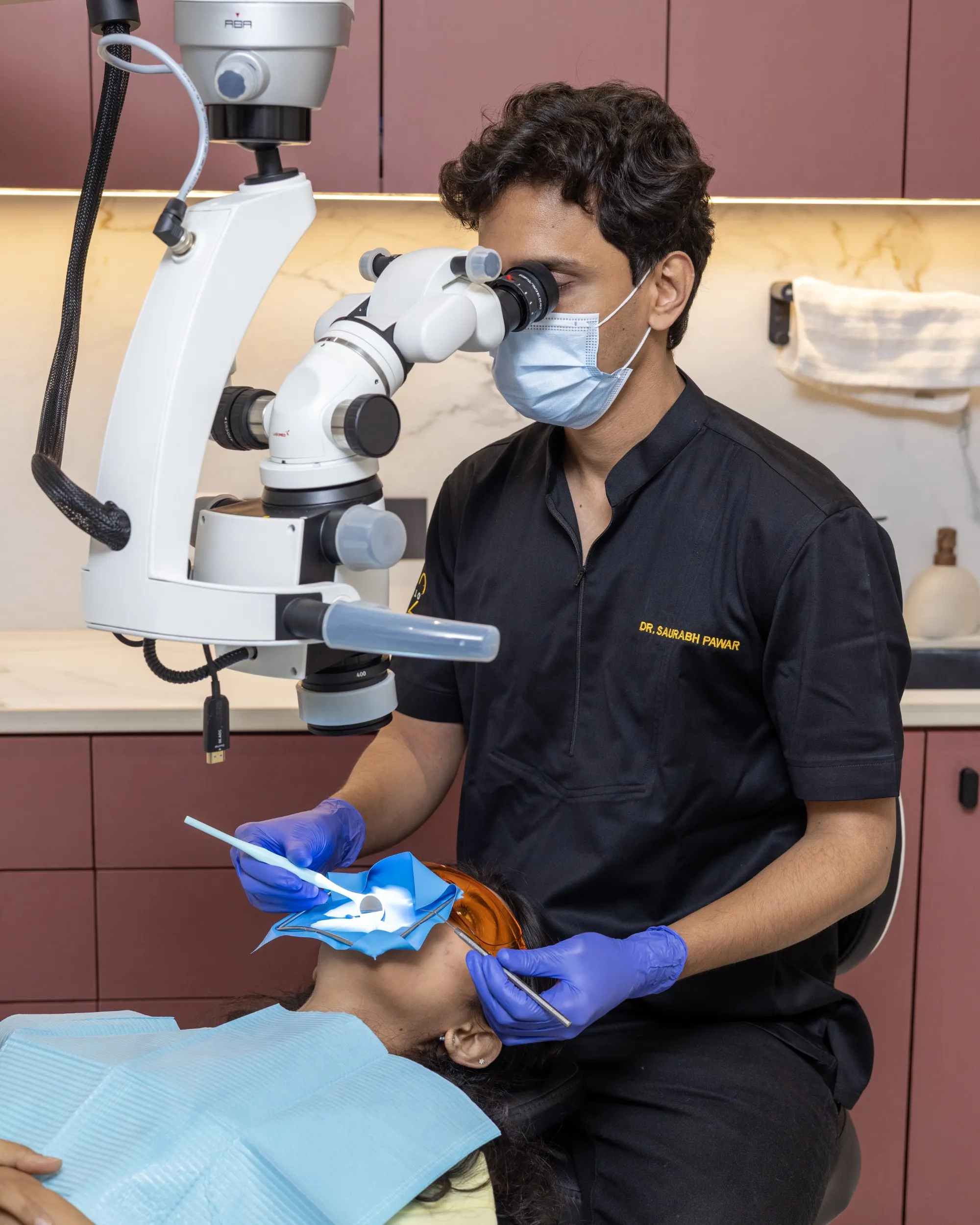
Conventional root canal treatment is performed without direct visibility into the canal system, relying on X-rays and tactile feedback alone. At Halo 32, every RCT is performed under an operating microscope providing 20–25x magnification with intense LED illumination.
At this level of magnification, the full length of each canal is clearly visible. Accessory canals, microscopic branches that conventional technique misses entirely, are identified and treated. The cleaning is verified as complete before the canal is sealed. The difference between treating a root canal and treating it properly starts here.
Laser-Assisted Disinfection
Even thorough mechanical cleaning leaves bacteria in the microscopic pores and tunnels within the dentinal walls of the tooth, areas that files and chemical rinses cannot fully penetrate. These residual bacteria are the primary reason root canal treatments fail and need to be repeated.
At Halo 32, laser technology eliminates this directly. Controlled laser energy creates shockwaves within the irrigation fluid, driving disinfectant deep into microscopic spaces and killing up to 99% of remaining bacteria. The laser also removes the debris layer left by files, allowing the final filling material to bond more tightly to the canal walls, creating a seal that holds against future reinfection.
Canal Sealing & Restoration
Once the canal system is thoroughly cleaned, disinfected, and verified under the microscope, it is sealed with a biocompatible filling material. A crown is typically recommended following RCT to restore the full strength and function of the tooth; your dentist will discuss this before you leave, along with a timeline that suits your treatment plan.
What Makes Halo 32's Root Canal Treatment Different
Painless by Protocol
Pain during root canal treatment is not inevitable; it is the result of inadequate anaesthesia. At Halo 32, the anaesthesia protocol is designed specifically for endodontic procedures, ensuring the tooth is completely insulated before any instrument enters the canal. Most patients are genuinely surprised by how comfortable the experience is.
Cleaned Where Files Cannot Reach
Laser-assisted disinfection treats the microscopic anatomy of the tooth that mechanical instruments leave behind. Up to 99% bacterial elimination. A tighter seal. A tooth that is far less likely to become symptomatic again in three or five years.
A Tooth That Lasts
A root canal performed correctly, cleaned completely, sealed properly, and restored with a crown, can last a lifetime. That is the standard every treatment at Halo 32 is held to.
One Appointment in Most Cases
The combination of microscope guidance and laser disinfection allows most root canal treatments at Halo 32 to be completed in a single, well-planned appointment, without compromising on thoroughness or long-term outcome.
Visible at 25x
The operating microscope changes what is possible in endodontics. Canals that cannot be seen cannot be treated. At 20–25x magnification, our clinicians work with a level of precision and completeness that unaided technique cannot achieve, reducing the likelihood of missed canals, incomplete cleaning, and the need for retreatment.
What to Expect After Your Root Canal
Most patients leave their root canal appointment feeling significantly better than when they arrived; the source of the pain has been removed. Some tenderness in the surrounding area for the following day or two is normal and manageable with standard over-the-counter pain relief.
- Day 1–2: Mild tenderness when biting on the treated tooth is normal. Avoid hard foods on that side. Over-the-counter pain relief is typically sufficient.
- Sensitivity: The tooth may feel slightly different from surrounding teeth for a short period. This settles as the surrounding tissue heals.
- Crown Placement: A temporary filling is placed at the end of your appointment. A permanent crown should be fitted as soon as your dentist advises; leaving the tooth uncrowned for an extended period increases the risk of fracture.
- Follow-Up: We schedule a review appointment before you leave. If you experience unexpected pain, swelling, or the temporary filling dislodges, contact us immediately.
Why Halo 32 for Root Canal Treatment

The Last Thing You'll Dread
Everyone dreads experiencing pain again in a treated tooth in a few years. The difference between a root canal that lasts and one that needs to be retreated in five years is not luck; it is technique, technology, and the thoroughness applied to a procedure most clinics treat as routine.
Operating Microscope, Standard at Halo 32, Rare Everywhere Else
Most dental clinics in Pune perform root canal treatment without magnification. At Halo 32, the operating microscope is not an optional upgrade; it is how every RCT is performed. The clinical difference in outcome is not marginal.
Laser Disinfection, Where Conventional Technique Stops Short
Mechanical cleaning and chemical rinses leave residual bacteria in areas they physically cannot reach. Laser-assisted disinfection at Halo 32 addresses this directly, producing a level of sterilisation that conventional endodontics cannot achieve.
Painless, Without Compromise
Fear of root canal treatment is almost always fear of pain. At Halo 32, that fear is addressed before the procedure begins, with an anaesthesia protocol that prioritises complete comfort, not just adequate numbness.
FAQs
Is root canal treatment painful?
The procedure itself, no. Root canal treatment at Halo 32 is performed under complete local anaesthesia, and most patients describe the experience as far more comfortable than they expected. The pain associated with root canals is the pain of the infection before treatment, not the treatment itself. Some tenderness for a day or two afterward is normal and manageable with standard pain relief.
Why does Halo 32 use a microscope for root canal treatment?
Root canal systems are complex; most teeth have multiple canals, and many have accessory branches that are invisible to the naked eye. Without magnification, these areas go untreated, leaving bacteria that can cause reinfection months or years later. At 20–25x magnification, our clinicians can see and treat the full canal system with a level of completeness that unaided technique simply cannot achieve. It is not a premium add-on; it is how root canals should be done.
What does laser disinfection actually do that chemical rinses don't?
Standard chemical irrigants clean the main canal space effectively, but the dentinal walls of a tooth have microscopic pores and tubules that chemicals cannot fully penetrate. Bacteria in these spaces survive conventional cleaning and are the primary cause of root canal failure. Laser energy creates controlled shockwaves in the irrigation fluid, driving disinfectant deep into these spaces and killing up to 99% of remaining bacteria. It also removes the debris layer left by files, allowing the final seal to bond more tightly. The result is a tooth that has been cleaned far more completely, and is far less likely to cause problems again.
Can a root canal be done in one appointment?
In most cases at Halo 32, yes. The combination of microscope guidance and laser disinfection allows treatment to be completed thoroughly in a single, well-planned appointment. Complex cases, severely curved canals, heavily calcified systems, or retreatments may require a second visit. Your clinician will advise after the initial assessment.
Do I need a crown after root canal treatment?
In most cases, yes, and promptly. A tooth that has undergone root canal treatment loses structural integrity and is significantly more susceptible to fracture without crown protection. Delaying crown placement after RCT is one of the most common reasons root canal treated teeth are eventually lost. We discuss crown timing and options before you leave your RCT appointment.
How long does a root canal treated tooth last?
A root canal performed correctly, cleaned completely, sealed properly, and restored with a crown can last a lifetime. The key variables are the thoroughness of the original treatment, the quality of the crown placed afterward, and ongoing oral hygiene and check-ups. At Halo 32, the treatment is held to a standard designed for longevity, not just immediate resolution.
What is the difference between a first-time root canal and a retreatment?
A retreatment is performed when a previously root canal treated tooth becomes symptomatic again, usually because the original treatment left residual infection, missed canals, or the seal has failed over time. Retreatments are more complex than first-time procedures. At Halo 32, the microscope and laser combination is particularly valuable in retreatment cases, allowing us to identify what the original treatment missed and address it completely.
A Root Canal Done Right. Once and for all.
Book a consultation at Halo 32 in Kharadi, Pune.