
Veneers in Pune
What Are Veneers?
Who Should Consider Veneers?
Veneers are an effective solution for a range of cosmetic concerns. You may be a candidate if:
- Your teeth have deep or intrinsic staining that whitening cannot address
- One or more teeth are chipped, worn, or fractured at the edges
- You have small gaps between your front teeth that you would like closed
- Your teeth are slightly uneven in shape, length, or size
- Minor misalignment affects the appearance of your smile but does not require orthodontics
- You want a significant improvement in the overall appearance of your smile with minimal tooth preparation
Veneers are not suitable for teeth with significant structural damage or advanced decay; these need to be addressed with crowns or other restorative treatment first. Your dentist will assess suitability at your consultation.
Your Veneer Treatment at Halo 32
Digital Smile Design
Before any preparation begins, your smile is designed digitally. Facial photographs and a 3D intraoral scan are used to plan the shape, shade, proportion, and length of your veneers in the context of your full face. The proposed design is shown to you on screen; you approve it, request adjustments, or refine it further before treatment begins.
Tooth Preparation
A thin layer of enamel, typically half a millimetre, is removed from the front surface of the tooth to create space for the veneer to sit flush. At Halo 32, preparation is minimal and precisely limited to what is clinically necessary. For composite veneers, preparation is often not required at all.
Shade Selection & Scan
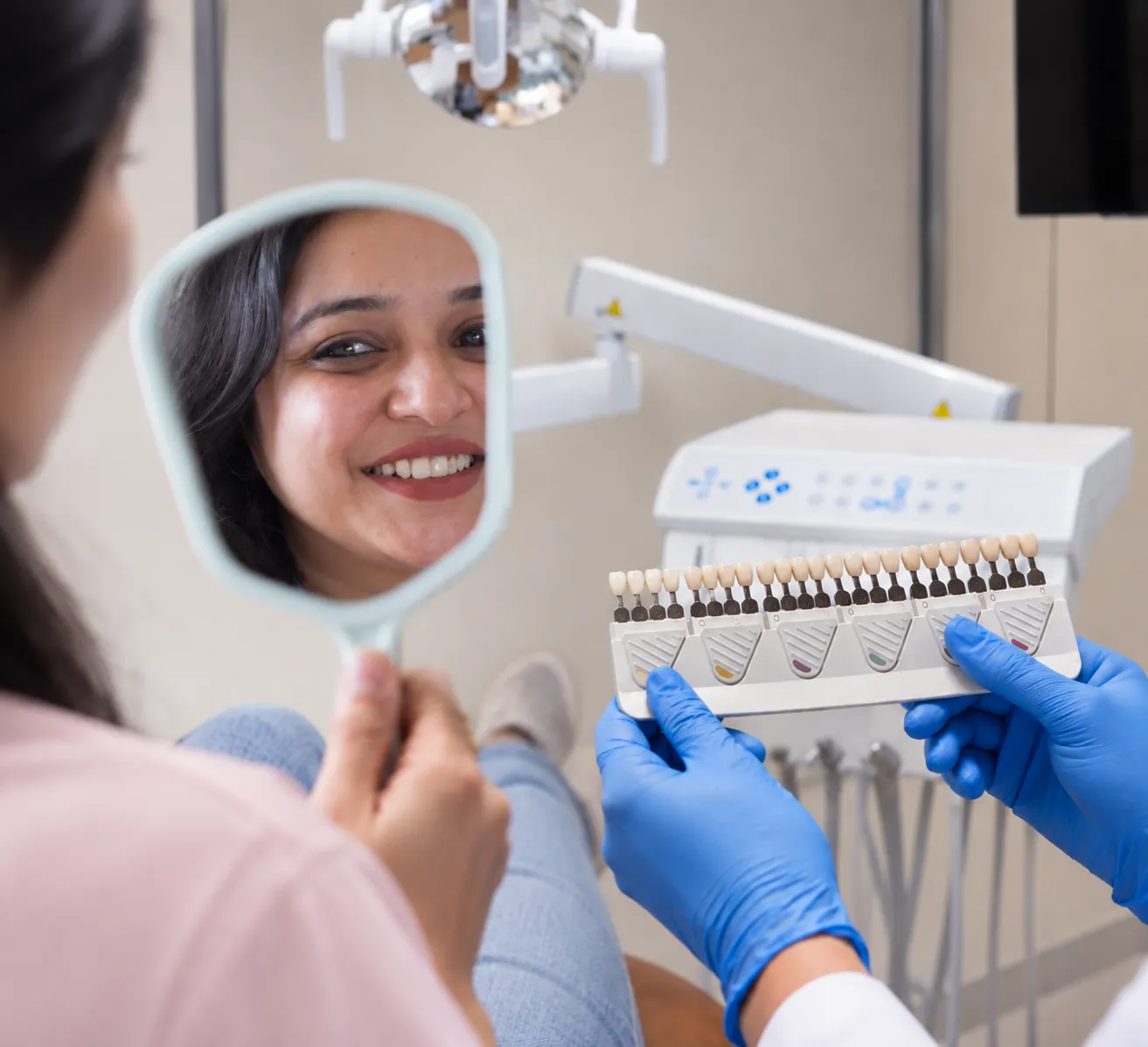
Your final shade is confirmed, and a 3D digital scan of the prepared teeth is taken, replacing traditional impression trays entirely. This scan is used to fabricate ceramic veneers to exact specifications. For composite veneers, fabrication takes place directly in the appointment.
Fabrication
Ceramic veneers are custom-fabricated in a dental laboratory from high-quality porcelain, a process that typically takes one to two weeks. A temporary veneer is placed in the interim to protect the prepared tooth and maintain aesthetics. Composite veneers are built up directly on the tooth in the same appointment.
Bonding & Final Fitting
The veneers are tried in before bonding, checked for shade, fit, and shape. Minor adjustments are made if needed. Once confirmed, they are permanently bonded to the tooth surface and polished to a final finish. The bite is checked and refined before you leave.
Composite vs Ceramic, Which Is Right for You?
Composite Veneers
Composite veneers are applied directly to the tooth surface by your dentist in a single appointment. They require little to no removal of existing tooth structure, are more affordable than ceramic, and can be repaired if chipped. They are a strong choice for patients who want an immediate improvement with minimal commitment. The trade-off: composite is less stain-resistant than ceramic and may need maintenance, refinishing, or replacement over time, typically after five to seven years.
Ceramic Veneers
Ceramic veneers are fabricated from high-quality porcelain in a dental laboratory, to precise specifications. They offer exceptional durability, lifelike translucency, and stain resistance that composite cannot match. The result is virtually indistinguishable from natural enamel, and with proper care, ceramic veneers can last ten to fifteen years or longer. The trade-off: ceramic requires two appointments and a slightly higher investment. For patients who want the most durable, most natural-looking, most long-lasting result, ceramic is the clinical standard.
What to Expect After Veneers
Veneers are a permanent addition to your teeth. There is minimal recovery after bonding; most patients return to normal eating and activity the same day, with a few simple guidelines:
- First 24 Hours: Avoid biting into very hard foods directly with the veneered teeth while the bonding material fully sets.
- Ongoing Care: Brush and floss normally. Avoid habits that put excessive pressure on the veneers, biting nails, opening packaging with teeth, or grinding without a night guard if indicated.
- Check-Ups: Regular six-monthly check-ups allow your dentist to monitor the veneers, check the bonding, and address any concerns early.
- Longevity: Composite veneers: 5–7 years with care. Ceramic veneers: 10–15 years or longer. Both can be replaced when needed.
Why Halo 32 for Veneers

Digital Smile Design, Every Time
At Halo 32, no veneer case begins without Digital Smile Design. You see the proposed result before any tooth preparation occurs. This is not standard practice at most clinics.
Minimal Preparation as a Principle
The goal at Halo 32 is always to remove as little natural tooth structure as possible. Preparation is limited strictly to what the final result requires, nothing more.
Fabrication From Accurate Data
3D digital scanning replaces traditional impressions for ceramic veneer cases. The accuracy of the data used to fabricate your veneers directly affects how well they fit and how natural they look. There are no impression trays at Halo 32.
Results That Look Natural
A well-made veneer is invisible as a veneer. The shade, translucency, and surface texture of the material is selected to match and complement your surrounding teeth, so the result looks like your smile at its best, not a different smile entirely.
FAQs
Do veneers damage the natural tooth underneath?
Veneer placement requires a thin layer of enamel to be removed from the tooth surface, typically around half a millimetre, to allow the veneer to sit flush without appearing bulky. This is a permanent change to the tooth structure. The veneer then protects the prepared surface, and the tooth functions normally beneath it. For composite veneers, preparation is minimal or sometimes not required at all.
How long do veneers last?
Composite veneers typically last five to seven years before refinishing or replacement is needed. Ceramic veneers, with proper care, last ten to fifteen years or significantly longer. Both can be replaced when they reach the end of their lifespan.
Can veneers be whitened?
No. Ceramic and composite materials do not respond to whitening agents. If you are considering whitening and veneers, whitening should be completed first; veneers are then shade-matched to your whitened teeth. Your dentist will sequence treatment appropriately.
Will veneers look natural?
A well-planned and well-made veneer is indistinguishable from natural enamel. At Halo 32, shade selection, translucency, and surface texture are all considered in the design and fabrication process. The goal is a result that looks like your smile, refined, not replaced.
What is the difference between a veneer and a crown?
A veneer covers only the front surface of a tooth. A crown covers the entire visible tooth. Veneers are used when the tooth is structurally sound and only the front surface needs to be changed for cosmetic or minor corrective reasons. A crown is recommended when the tooth has significant structural damage, decay, or has undergone root canal treatment and needs full protection coverage. Your dentist will recommend the appropriate option based on the condition of your tooth.
The Smile You've Been Thinking About.
Book your veneer consultation at Halo 32 in Kharadi, Pune.