Laser TMJ Pain Therapy in Pune
What Is TMJ Pain Therapy?
Who Should Consider Laser TMJ Therapy?
For Jaw Pain That Has Gone Unresolved for Too Long.
Laser TMJ therapy is appropriate for patients experiencing symptoms associated with temporomandibular joint dysfunction. You may benefit if you experience:
- Jaw pain or tenderness, particularly in the morning or after eating
- Frequent headaches, particularly around the temples or at the base of the skull
- Facial pain or pressure that has no clear dental cause
- A clicking, popping, or grinding sound when opening or closing the mouth
- Difficulty or discomfort when opening the mouth fully
- Neck and shoulder tension that correlates with jaw habits or posture
- Pain that worsens with stress, clenching, or prolonged chewing
A clinical assessment at Halo 32 will determine whether your symptoms are consistent with TMJ dysfunction and whether laser therapy is the most appropriate component of your management plan. In some cases, laser therapy works alongside a night guard, physiotherapy, or other management strategies.
Your TMJ Laser Therapy at Halo 32
Assessment
A thorough assessment of your jaw function, bite, muscle tension, and symptom history is conducted. Digital X-rays and, where indicated, 3D imaging assess the joint structure. A personalised treatment plan is developed, outlining the number of sessions recommended and any complementary management strategies.
Laser Therapy Sessions
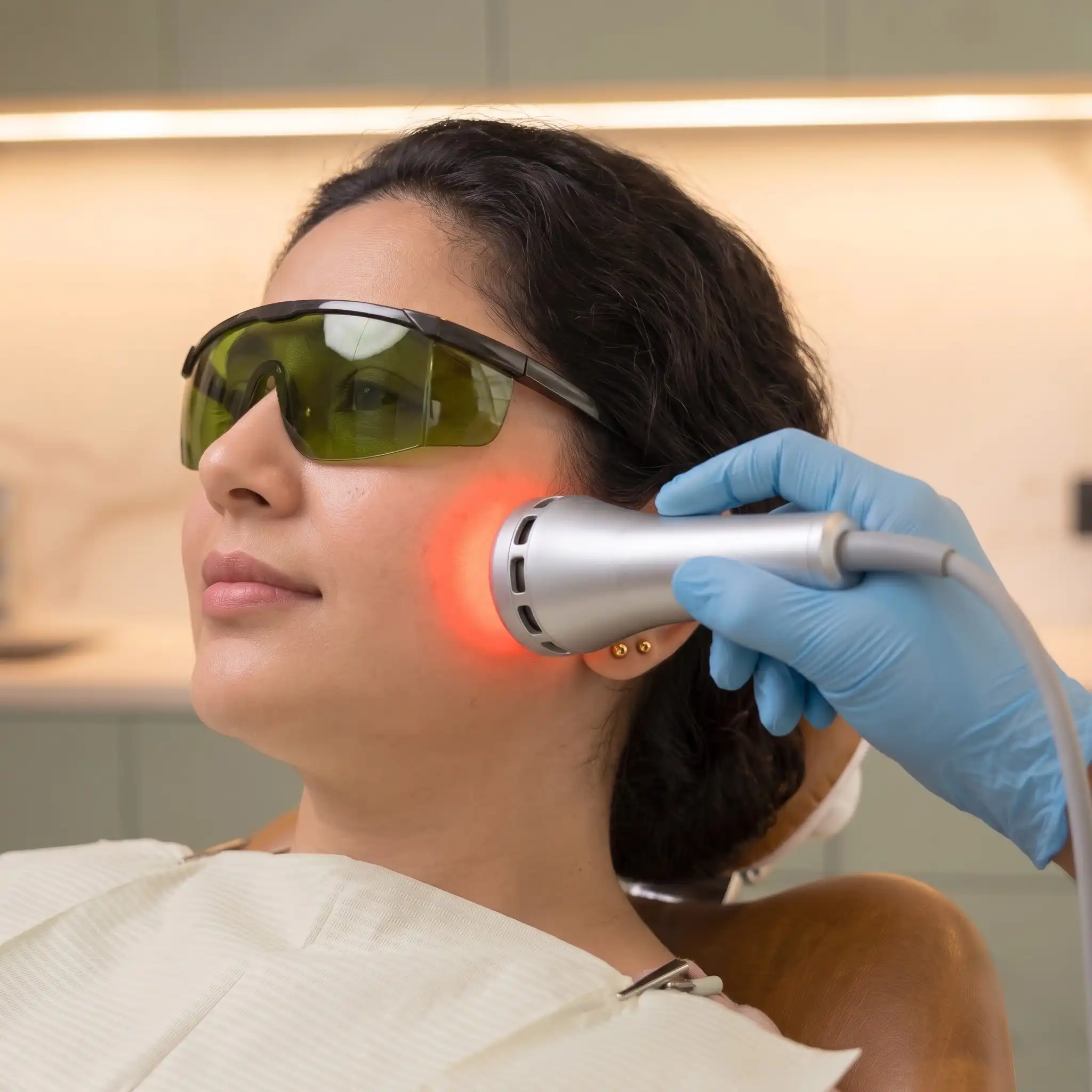
Targeted low-level laser energy is delivered to the TMJ and surrounding musculature, the joint itself, the masseter, temporalis, and pterygoid muscles, and the surrounding soft tissue as clinically indicated. The laser stimulates cellular activity, promotes circulation, reduces inflammation, and supports the body's natural healing response.
Each session takes approximately twenty to thirty minutes. The procedure is entirely comfortable; patients typically feel gentle warmth during treatment. There is no pain, no injections, and no recovery period.
Treatment Course & Review
Most patients require a course of four to eight sessions for meaningful and lasting improvement. Progress is assessed after the initial sessions, and the treatment plan is adjusted based on response. Improvement is often noticed from the second or third session onward.
What Laser TMJ Therapy Does for You
A Conservative First Step
For many patients, laser therapy provides sufficient relief without the need for more invasive interventions. Where additional management is needed, a night guard, physiotherapy, or, in complex cases, specialist referral, laser therapy complements these approaches effectively.
No Medication. No Surgery. No Downtime.
Laser TMJ therapy is entirely non-invasive. It requires no injections, no prescription medication, and no recovery period. Patients return to their normal day immediately after every session.
Reduces Inflammation
Laser energy delivered to the joint and surrounding tissue reduces localised inflammation, addressing one of the primary drivers of TMJ pain and restricted movement.
Relieves Muscle Tension
The masseter and temporalis muscles, which work in conjunction with the TMJ, are frequent sites of chronic tension in TMJ disorders. Laser therapy relieves muscle spasm and reduces the tension that contributes to headaches and facial pain.
Improves Jaw Function
As inflammation reduces and muscle tension eases, jaw opening range typically improves and clicking or popping sounds may diminish. Patients report being able to eat, speak, and open their mouth more comfortably as treatment progresses.
What to Expect During Treatment
Comfortable. Progressive. Cumulative.
Each session is comfortable and brief. Improvement from laser TMJ therapy is typically cumulative, building across sessions rather than immediately after the first. Most patients notice a meaningful reduction in pain and improved jaw function within the first three to four sessions.
- Session Duration: Approximately 20–30 minutes per session.
- Number of Sessions: Most treatment courses involve 4–8 sessions, depending on severity and response.
- Comfort: No pain during treatment. A gentle warmth is typically felt at the treatment site.
- Downtime: None. Normal activity resumed immediately after every session.
- Results: Cumulative improvement across the course of treatment. Progress reviewed and plan adjusted as needed.
Why Halo 32 for Laser TMJ Therapy

Thorough Assessment Before Treatment
TMJ symptoms overlap with several other conditions. At Halo 32, a thorough clinical assessment ensures that the symptoms are correctly attributed before treatment is started, and that laser therapy is the appropriate intervention for your specific presentation.
Personalised Treatment Plans
The number of sessions, the areas treated, and the complementary management strategies recommended are specific to your clinical presentation and how you respond to treatment. No two TMJ cases are managed identically at Halo 32.
Part of a Broader Management Strategy
Where laser therapy is most effective as part of a broader approach, combined with a night guard for bruxism, lifestyle modification, or physiotherapy referral, this is coordinated and communicated clearly. Laser therapy is not positioned as the only answer where a more comprehensive approach would serve the patient better.
FAQs
How many sessions will I need?
Most patients benefit from four to eight sessions, with progress reviewed after the initial three or four. Mild cases may resolve with fewer sessions; more complex or long-standing TMJ dysfunction may require more. Your treatment plan will outline the recommended course and the rationale, with flexibility to adjust based on your response.
Is laser TMJ therapy painful?
No. The procedure is entirely comfortable; most patients describe a gentle warmth at the treatment site. There are no injections, no instruments inside the mouth, and no discomfort during or after treatment.
How quickly will I notice improvement?
Improvement from laser TMJ therapy is cumulative. Many patients notice some reduction in pain and tension from the second or third session. The full benefit of the treatment course is typically apparent by its completion, and can continue to develop in the weeks following the final session.
Can laser therapy be used alongside a night guard?
Yes, and the two approaches complement each other effectively. A night guard reduces the load on the TMJ and surrounding muscles during sleep. Laser therapy addresses the inflammation and muscle tension that has already accumulated. Used together, they address both the cause and the consequence of TMJ dysfunction.
Is TMJ pain the same as jaw pain from dental problems?
Not always. Dental pain, from a cavity, cracked tooth, or gum problem, can refer to the jaw and mimic TMJ symptoms. A thorough assessment at Halo 32 distinguishes between dental sources of jaw pain and genuine TMJ dysfunction, so the right treatment is applied to the right cause.
Jaw Pain, Addressed With the Attention It Deserves.
Book your TMJ consultation at Halo 32 in Kharadi, Pune.