
Scaling and Root Planing in Pune
What Is Scaling and Root Planing?
Who Should Consider Scaling and Root Planing?
For Gum Disease That Has Taken Hold.
Scaling and root planing is recommended when gum disease has progressed beyond simple gingivitis, the stage at which infection has moved into the supporting structures of the teeth. You may need this treatment if:
- Your gums bleed consistently when you brush or floss
- Your gums have receded, teeth appear longer than they used to
- You have been diagnosed with periodontitis at a check-up or dental examination
- Pockets between your teeth and gums measure four millimetres or deeper on probing
- You have persistent bad breath despite good oral hygiene
- Your teeth feel loose or have shifted position
- You have a medical condition, such as diabetes or cardiovascular disease, that is associated with gum disease and requires its active management
Gum disease is often painless until it has caused significant damage. Regular check-ups at Halo 32 allow it to be identified and treated early, before scaling and root planing becomes necessary. Where it is needed, the treatment is most effective when performed thoroughly and followed up with appropriate maintenance.
Your Scaling and Root Planing at Halo 32
Periodontal Assessment
A full periodontal assessment is conducted before treatment begins, measuring pocket depths around every tooth, assessing bone levels on digital X-rays, and mapping the distribution and severity of the disease. This gives us a precise picture of what needs to be treated and how.
Local Anaesthesia
Scaling and root planing is performed under local anaesthesia so the treatment is entirely comfortable. Working below the gum line requires the area to be fully numb; at Halo 32, this is applied precisely and confirmed before treatment begins.
Scaling
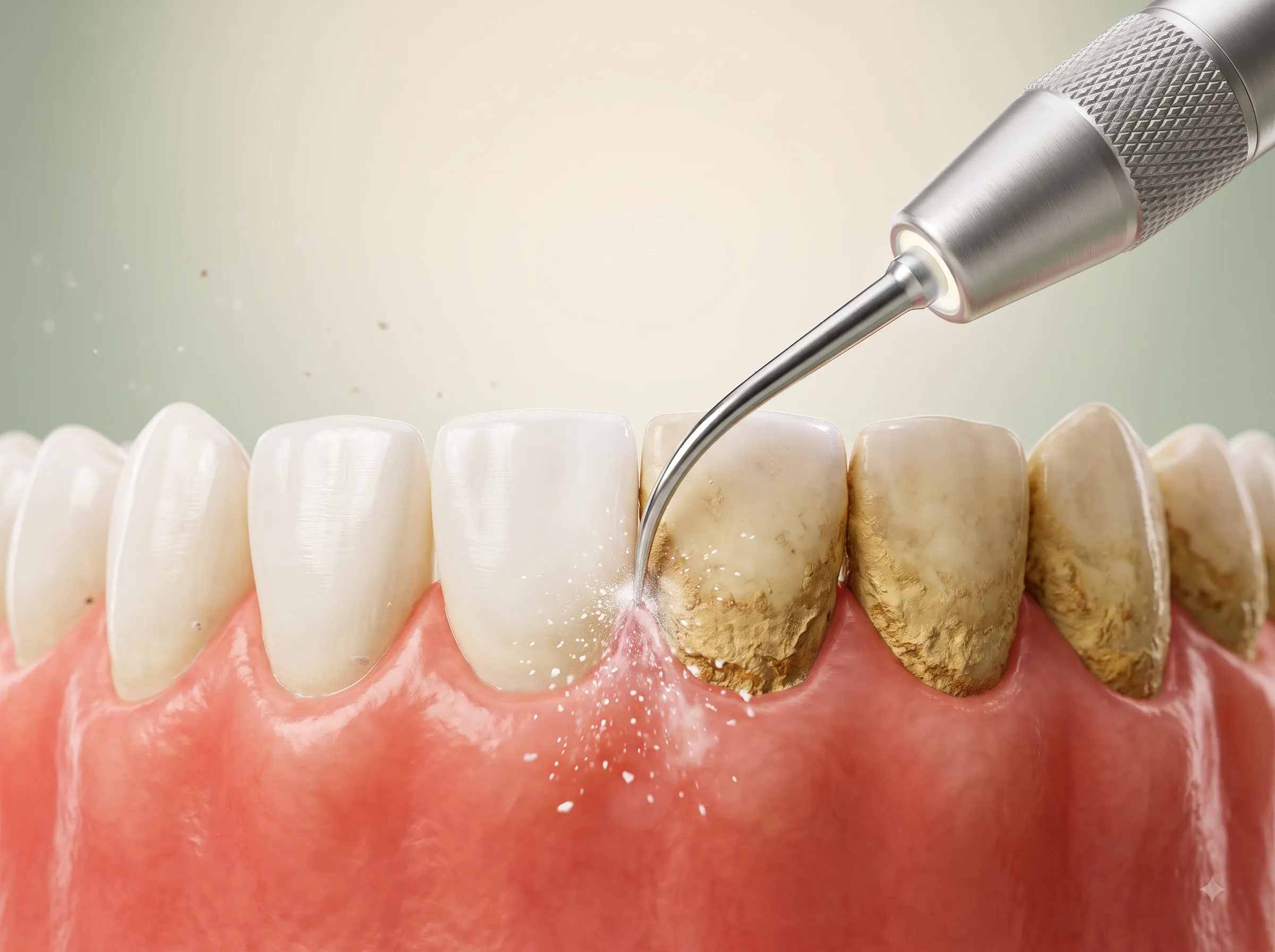
Ultrasonic and hand scaling instruments are used to remove plaque, tartar, and calculus deposits from the tooth surfaces above and below the gum line, including the depths of the periodontal pockets. The process is thorough and methodical, working systematically around every affected tooth.
Root Planing
The root surfaces are smoothed and cleaned, removing embedded bacterial toxins and the roughness that allows bacteria to adhere. Smooth root surfaces support gum tissue reattachment and make it significantly harder for deposits to reform at the same rate.
Review & Maintenance Planning
A review appointment is scheduled four to six weeks after treatment to assess healing and measure the response of the gum tissue. Based on this review, a personalised maintenance plan is outlined, the frequency of professional cleaning and monitoring visits that will keep the disease from progressing further.
What Scaling and Root Planing Does for You
Supports Overall Health
The connection between periodontal disease and systemic health is well established. Gum disease is associated with increased risk of cardiovascular disease, complications in diabetes, and adverse pregnancy outcomes. Treating it effectively is not only a dental decision.
Removes What Routine Cleaning Cannot
The deposits that cause periodontitis form below the gum line, outside the reach of even the most diligent home care and routine professional cleaning. Scaling and root planing is the only way to remove them without surgery.
Halts Disease Progression
Gum disease left untreated progresses. Bone loss accumulates. Teeth loosen. Scaling and root planing, performed thoroughly and followed by appropriate maintenance, stops this progression and preserves the teeth and bone that remain.
Prevents More Extensive Treatment
Removing the bacterial deposits that drive gum inflammation produces a measurable improvement in gum health, reduced bleeding on brushing, less tenderness, and a visible reduction in gum swelling, often within weeks of treatment.
What to Expect After Treatment
Some Sensitivity. Significant Improvement.
The gum tissue will be tender and sensitive for a few days following scaling and root planing; this is entirely normal and reflects the thoroughness of the treatment rather than a complication.
- Days 1–3: Mild soreness and sensitivity to cold are normal. Standard pain relief and warm salt water rinses provide comfort.
- Diet: Soft foods and avoiding very hot or cold foods for the first few days reduces sensitivity.
- Oral Hygiene: Continue brushing and flossing, gently at first. Keeping the area clean during healing is essential for the best outcome.
- Review: Four to six weeks after treatment, pocket depths are remeasured to assess healing. The response to treatment determines whether further intervention is needed or whether maintenance is sufficient.
Why Halo 32 for Scaling and Root Planing

A Thorough Assessment Before Treatment
At Halo 32, scaling and root planing begins with a complete periodontal assessment, not an approximation based on visual examination alone. Every pocket is measured, every affected surface is identified, and the treatment is planned around the specific distribution of disease rather than applied uniformly.
Meticulous Technique
The effectiveness of scaling and root planing is directly dependent on the thoroughness of the technique. At Halo 32, the treatment is performed methodically and unhurriedly, with the time and attention each tooth and each pocket requires.
Maintenance That Sustains the Result
Scaling and root planing is the beginning of periodontal management, not the end of it. At Halo 32, treatment is followed by a structured maintenance programme, regular review appointments that monitor gum health and intervene early if disease shows signs of activity.
FAQs
Is scaling and root planing painful?
The procedure is performed under local anaesthesia; you will feel no pain during treatment. Post-operative tenderness and sensitivity for a few days is normal and manageable with standard pain relief. Most patients find the discomfort significantly less than they anticipated.
How many appointments does scaling and root planing take?
Most cases are treated over two appointments, one for each side of the mouth, typically scheduled one to two weeks apart. More extensive disease may require additional sessions. The full treatment plan is outlined at your periodontal assessment before any treatment begins.
Will my gums go back to normal after treatment?
Scaling and root planing reduces inflammation and supports gum tissue reattachment, but the bone loss that has already occurred does not regenerate with this treatment alone. The goal is to halt progression, stabilise the condition, and maintain what remains. In cases of significant bone loss, additional procedures, such as grafting, may be discussed at your review appointment.
How often do I need maintenance appointments after treatment?
Most patients with a history of periodontitis benefit from professional cleaning and monitoring every three to four months, more frequently than the standard six-month interval for patients without gum disease. The appropriate interval for you will be determined based on your response to treatment and reviewed over time.
Gum Health, Taken Seriously.
Book your periodontal consultation at Halo 32 in Kharadi, Pune.